
The Hidden Political Meaning Behind the First Monaco Grand Prix
The Monaco Grand Prix, today celebrated as one of the most glamorous and prestigious events in motorsport, was not merely a showcase of speed and automotive innovation when it first took place. The inaugural race, held in 1929, carried layers of political significance and social strategy that are often overlooked in popular narratives. At a time when Europe was navigating the aftermath of World War I and the shifting dynamics of interwar geopolitics, Monaco—one of the smallest yet most strategically positioned principalities on the continent—used the race to assert its identity, economic relevance, and diplomatic influence. Understanding the hidden political meaning behind this first Grand Prix requires examining Monaco’s social hierarchy, its interactions with neighboring France and Italy, and the broader European desire for prestige and soft power in a period marked by uncertainty.
The decision to host an international racing event was far from an apolitical exercise. Monaco’s ruling family, the Grimaldis, recognized that hosting a race of this scale could project the image of Monaco as a modern, sophisticated, and cosmopolitan principality. The country’s tiny size limited its traditional political or military influence, so cultural and sporting events became a key avenue for asserting prominence on the European stage. By attracting international drivers, wealthy spectators, and global media attention, Monaco positioned itself as more than a scenic destination for the elite; it became a hub of influence, visibility, and economic opportunity. In this way, the first Grand Prix was not just a sporting event—it was a deliberate act of statecraft designed to solidify Monaco’s relevance in a competitive continental landscape.
Monaco’s Geopolitical Strategy and Soft Power Ambitions
Monaco’s geopolitical situation in the 1920s was uniquely delicate. Nestled along the French Riviera and bordering both France and the Mediterranean, Monaco relied heavily on its neighbors for economic stability and political security. Despite its small size, the principality sought to maintain autonomy and cultivate a distinctive identity. The first Monaco Grand Prix served as an instrument of soft power, allowing the ruling family to attract global attention without engaging in military or diplomatic confrontation. By creating an event that combined technical skill, spectacle, and luxury, Monaco effectively leveraged its geographical and cultural assets to assert influence in the broader European arena.
Soft power, in this context, was about perception as much as it was about politics. Hosting a prestigious event demonstrated that Monaco could operate on the same stage as larger European nations, showing organizational competence, innovation, and sophistication. International drivers and teams were invited to compete on a circuit that wove through the streets of Monte Carlo, symbolically blending the traditional elegance of the principality with the modernity of cutting-edge automotive technology. Every corner of the race, from the harbor backdrop to the tight city turns, was carefully crafted to broadcast a message of Monaco as a forward-thinking, cosmopolitan hub. This message resonated not only with potential tourists and investors but also with neighboring states, who could interpret the event as evidence of Monaco’s capability and ambition.
The political dimensions of the race were further reinforced by its timing and context. The 1920s were a period of reconstruction and competition in Europe, with countries attempting to regain prestige lost during the Great War. Monaco, lacking a conventional power base, seized the opportunity to participate in this competitive culture through non-traditional means. The Grand Prix allowed Monaco to assert a symbolic form of influence that relied on spectacle and cultural prestige rather than economic might or military power. This approach was subtle yet effective: the principality became associated with glamour, innovation, and international relevance, establishing patterns that continue to define its identity nearly a century later.
Social Hierarchy and the Role of Elite Patronage
The first Monaco Grand Prix also carried significant implications for social and political hierarchies, both within Monaco and across Europe. The event was not designed for the average citizen; it targeted the wealthy elite, aristocrats, and industrial magnates who could attend, sponsor, and compete. In this way, the race functioned as a convergence point for political and economic influence. By cultivating a spectacle that appealed to the upper classes, the Grimaldis were able to reinforce their social legitimacy and forge alliances with influential figures who could support Monaco’s autonomy and prestige.
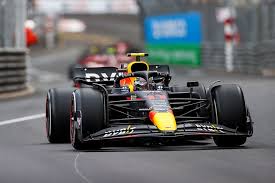
The presence of elite international competitors and audiences added a diplomatic layer to the Grand Prix. By inviting prominent figures from France, Italy, and other European nations, Monaco ensured that the event served as a neutral ground where alliances could be observed, relationships cultivated, and influence subtly negotiated. The race effectively became a stage for informal diplomacy, where appearances, social interactions, and public recognition of Monaco’s sophistication were as politically important as the competition on the track. In this sense, the first Monaco Grand Prix was not only a sporting endeavor but also a carefully orchestrated political theater.
Additionally, the race offered an opportunity to reinforce class distinctions within Monaco itself. While workers and lower-income citizens played critical roles in preparing and maintaining the infrastructure for the event, they were largely spectators rather than participants. The spectacle highlighted the divide between those who had access to wealth, influence, and international mobility and those who did not, reinforcing the social hierarchy that underpinned Monaco’s political system. This interplay between visibility, exclusivity, and performance was a calculated mechanism for sustaining the principality’s social and political order in a way that simultaneously showcased its modernity and preserved its traditional structures.
Economic Implications and National Branding
Beyond political signaling, the first Monaco Grand Prix had profound economic implications that further amplified its political meaning. The principality faced the challenge of maintaining financial independence while cultivating an image attractive to foreign investors, tourists, and industrial partners. The Grand Prix became a tool for economic diplomacy, allowing Monaco to market itself as a hub of luxury, innovation, and global relevance. The influx of international spectators and participants translated into revenue for hotels, restaurants, and ancillary services, reinforcing the principality’s economic viability.
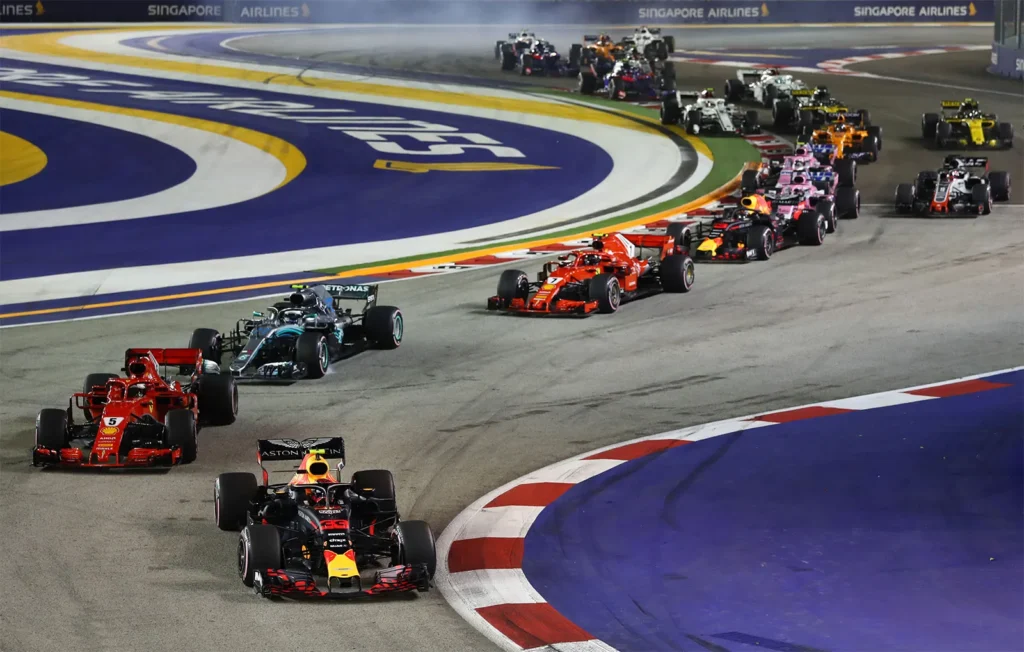
The event also contributed to the branding of Monaco as a destination synonymous with prestige and elite leisure. Unlike larger nations that relied on industrial or military prowess to secure influence, Monaco leveraged its small size, scenic beauty, and organizational capacity to create a unique competitive advantage. The Grand Prix positioned the principality as a site where wealth, sophistication, and technological prowess intersected, generating a perception of Monaco that extended far beyond its borders. This branding effort was inherently political, as it projected an image of stability, relevance, and exclusivity that supported the principality’s broader diplomatic and social goals.
Moreover, the economic and political strategies embedded in the Grand Prix were mutually reinforcing. By attracting high-net-worth individuals to the event, Monaco secured both immediate financial benefit and long-term reputational advantage. International attention translated into greater legitimacy and influence in regional affairs, creating a cycle in which economic activity and political clout were interdependent. The first Monaco Grand Prix was therefore not a simple sporting milestone but a carefully engineered instrument of statecraft, combining economic foresight with strategic messaging to elevate Monaco’s status on the European stage.
Conclusion: Motorsport as Political Theater
The first Monaco Grand Prix was far more than a test of speed and mechanical prowess. Beneath its glamorous surface, it represented a strategic political maneuver by the principality to assert its relevance, reinforce social hierarchies, and project an image of sophistication and modernity to the international community. By hosting a technically challenging, high-profile event, Monaco leveraged motorsport as a tool of soft power, creating economic opportunities, enhancing national branding, and cultivating diplomatic influence.
The race’s political significance extended beyond Monaco’s borders, influencing perceptions of the principality in neighboring France, Italy, and across Europe. It demonstrated that even a small state could participate meaningfully in international affairs by leveraging cultural and technological spectacle. Socially, the event reinforced elite hierarchies while simultaneously projecting an image of modern governance and cosmopolitan engagement. Economically, it solidified Monaco’s role as a hub of luxury and international tourism, creating a sustainable model for wealth and influence that continues to this day.
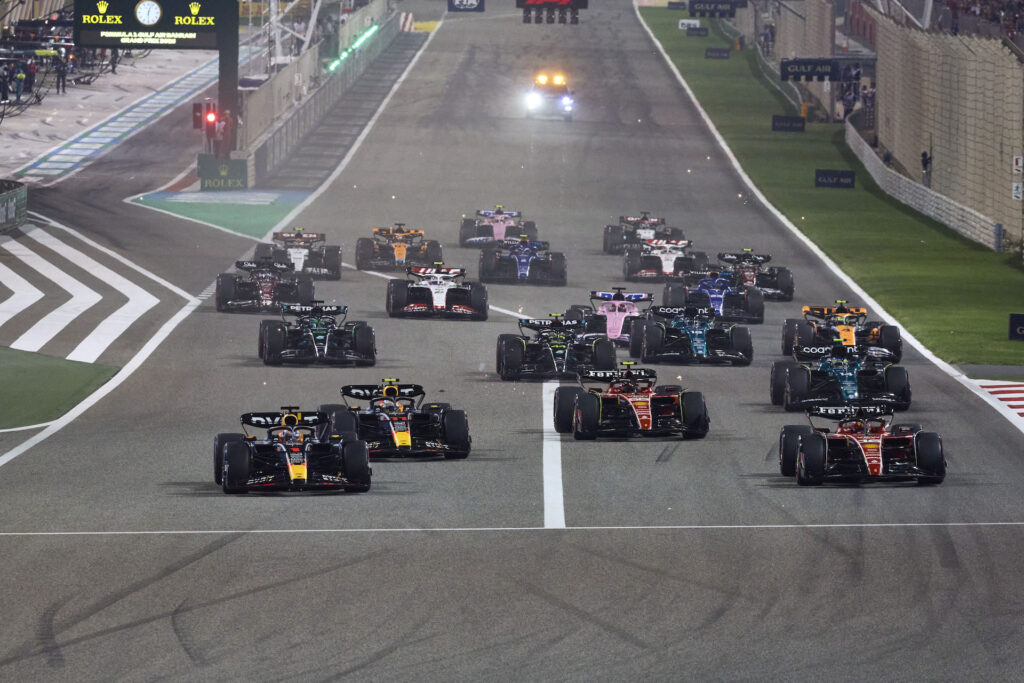
In retrospect, the inaugural Monaco Grand Prix illustrates how sporting events can function as instruments of political strategy, economic foresight, and cultural messaging. What began as a motor race through the streets of Monte Carlo has evolved into a globally recognized symbol of prestige and technological excellence. Yet the hidden political meaning embedded in that first race remains a crucial aspect of its legacy, reminding us that even seemingly apolitical spectacles can carry profound implications for national identity, diplomacy, and social order. Monaco’s ability to transform a sporting event into a multifaceted tool of statecraft offers a timeless lesson in the power of imagination, strategy, and spectacle in shaping international perception and influence.
Related Posts
The Legacy of the Mazda MX-5 Miata: A Timeless Roadster
The Mazda MX-5 Miata is a name that resonates with…

Exploring the Top Business Sectors to Invest in 2023
As we step into the year 2023, the global business…

Volkswagen Golf R vs. Golf GTI: Which is the Ultimate Hot Hatch?
The Volkswagen Golf has long been a cornerstone of the…